
Projects
Find out about our project updates here!
Recent work
Unveiling the heterogeneity of major depressive disorder
The heterogeneity of major depressive disorder (MDD) significantly hinders its diagnosis, effective clinical management, as well as patient-centered recovery paths. Numerous studies have attempted to uncover the heterogeneity of MDD using data-driven approaches to classify MDD biotypes based on various information, including symptomatology, medication response and multi-level biomarkers. Despite these findings hold promise in terms of clinical value, the clinical translation remains challenging due to rich biological information is often difficult to obtain in clinical practice and may not be feasible for accurately distinguishing subtypes at the individual level. As a result, clinicians may not be able to directly benefit from the findings of MDD biotypes in their practice, leaving ongoing challenges in fully unveiling heterogeneity of MDD and its clinical translation.
The current project aims to ultilize a person-centered method to identify MDD subtypes at the individual level based on standard DSM depressive symptoms in a large Chinese MDD cohort. The validity of subtyping model was verified at both symptomatology and neurophysiology levels. Notably, the reproducibility of the classification was also confirmed in an independent dataset, demonstrating good generalizability. The added value of this study pointed to its incremental value to clinical translation. This classification model driven by more accessible standard DSM depressive symptoms is easier to apply in clinical settings and therefore has a higher potential for clinical translation, helping to achieve more precise and personalized treatments. By utilizing accessible standard DSM depressive symptoms combined with the model generated by the current study, clinicians can more effectively identify patient subtypes and provide targeted and specialized treatments focusing on relevant therapeutic targets based on the neuroimaging characteristics of each subtype, thereby helping to yield optimal treatment outcomes.
Relevant publications:
Adversed Childhood Experiences in neuropsychiatric disorders across the life span
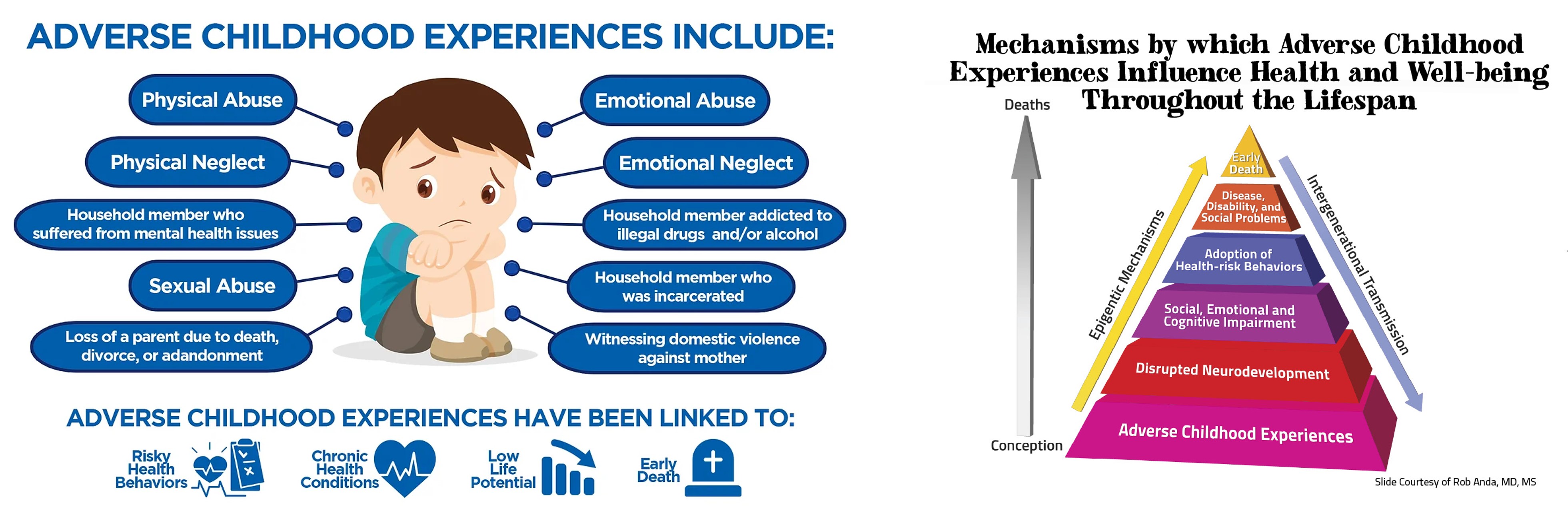 Environmental experiences in childhood and adolescence play a meaningful role in shaping health across the lifespan. It has been repeatedly established that exposure to adversed experiences during this period is a risk factor for adverse health consequences and psychopathology. Most of the previous studies used the cumulative risk approach to establish the relationship between ACEs and adverse health consequences / psychopathology, which focuses on the amount of ACEs exposure rather than the distinct types of ACEs. However, different types of ACEs may confer unique psychopathology risks. Despite the cumulative risk approach effectively reflecting the “dose-response” relationship between ACEs and psychopathology and has been widely used, it generally lacks specificity, which shows obvious limitations in distinguishing between distinct types of ACEs.
The current project aims to refine the common and unique effects of different types of ACEs on psychological consequences (e.g., attchment styles, personalty traits) and neurodevelopments, as well as on the occurrences of mental disorders by utilizing behavioral modeling and brain imaging techniques.